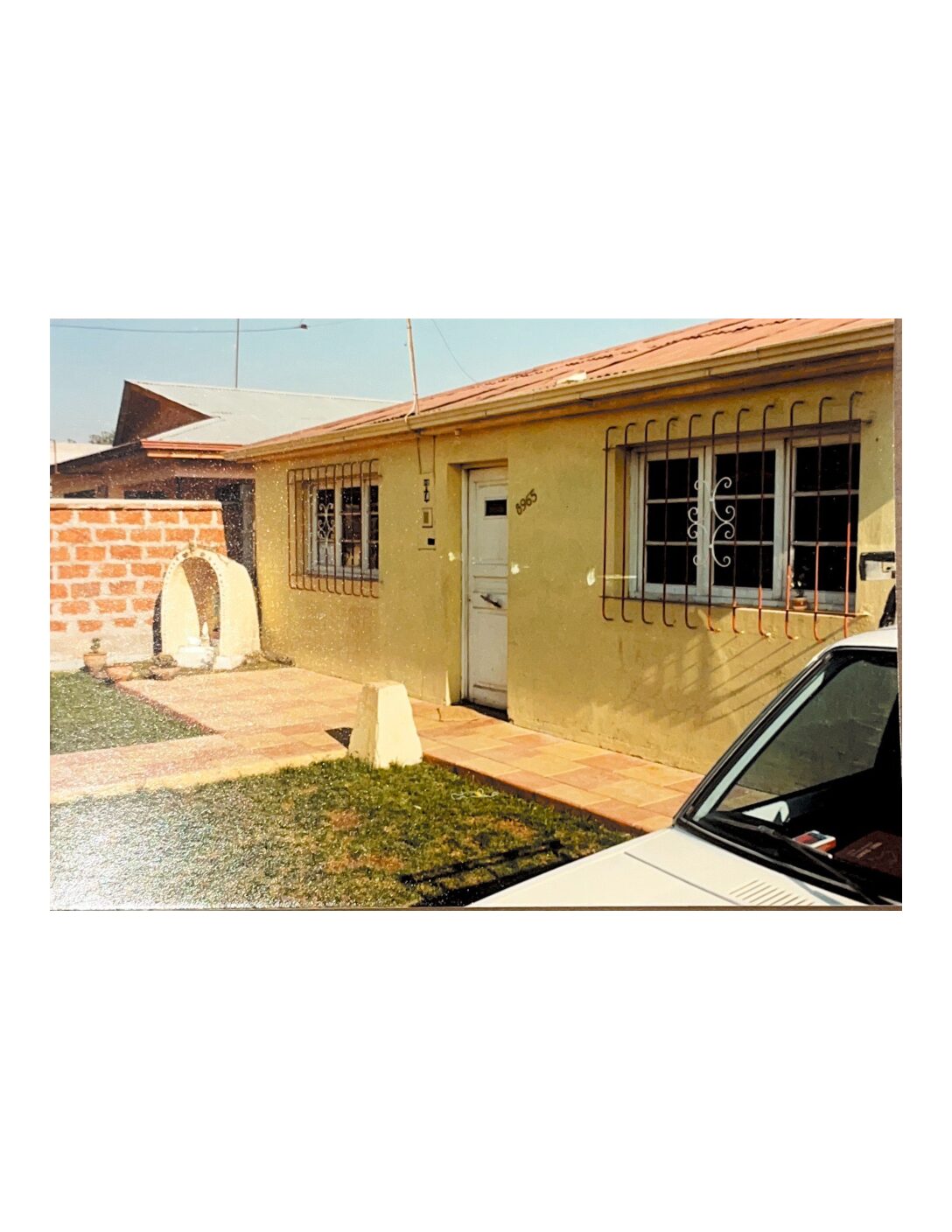
In 1981, Steve Reifenberg had recently graduated from the University of Notre Dame with a degree in philosophy. During the year following his graduation, he worked as a high school teacher with the idea that he would study law in the future. While reflecting on the next steps of his life, Steve reconnected with a friend from Notre Dame who had completed two years of volunteering in a university program in Santiago, Chile, at Saint George’s College, a school of the Congregation of Holy Cross. This friend connected him with Olga Díaz, who a few years earlier had started a small, privately run orphanage or “hogar” called Domingo Savio.
Steve recalls writing a handwritten letter to Olga Díaz, and a few weeks later, she replied saying that she would be happy to welcome him to Domingo Savio as a volunteer.
In November 1982, Steve arrived at the small house located at Rosa Ester 3281, in the La Granja municipality, south of Santiago. That place became his home for the following year, where he worked alongside Olga and other collaborators to care for, educate, and live in community with the thirteen children of the home. During his time there, Steve improved his Spanish, helped Olga and the other tíos and tías with daily tasks, but more importantly, he discovered the power of accompaniment, the importance of walking alongside others, and how to engage in a mutual exchange of ideas, skills, and knowledge.
“Although I arrived at their doorstep with the intention of being ‘their helper,’ they [Domingo Savio] accompanied me, and during those first two years and all the years that have passed since, I believe I have learned—and am still learning—to accompany them as well.
Despite all my mistakes, something worked well in our time together… I have realized that we have been on a path of mutual accompaniment for a long time…
My life has been enormously enriched in this process, and the concept of accompaniment has given me a new way to understand my own experiences, my teaching, and so much more.”— Professor Steve Reifenberg, “Teaching Accompaniment”
Although his initial plans were to stay only one year, Steve remained as a volunteer at Domingo Savio for two years. In his second year, he helped the tíos and tías in a fundraising campaign that raised over $15,000 to buy a new house in La Granja, where Domingo Savio is still located today. Although the hogar no longer operates as an orphanage, Domingo Savio remains a vital part of the local community, functioning as a community center for children, families, and older adults.
The Creation of the Domingo Savio Institute
After his first two years volunteering at Domingo Savio, Steve was unsure if he would return to Chile. However, year after year, he found himself back in Chile for professional and personal reasons, and he always stayed in touch with Olga, the children, and the foundation. Over time, Domingo Savio created a board of directors in Santiago, and Steve became a member.
Together, Domingo Savio and the Chilean board continued to collaborate to raise funds, grow the foundation and its programs, and serve the children of the La Granja community. During this period, the mission of Domingo Savio shifted: it ceased operating as a residential home and transformed into a community center for children, families, and older adults.
In 2006, along with former Domingo Savio volunteers from the United States—Daniel Saver, Kelly O’Rourke, and Karen Bloom—Steve helped to found the Domingo Savio Institute, a U.S.-based nonprofit organization whose goal is to raise awareness about the work of Domingo Savio and to raise donations in support of its mission.
The Domingo Savio Institute is a 501(c)(3) nonprofit organization registered in the United States, providing institutional support to Domingo Savio and working in close collaboration with the Chilean board.
Steve Reifenberg, Kelly O’Rourke, Daniel Saver, and Karen Bloom are active members of the board of the Domingo Savio Institute. Julie Hersh and Terry Coonan serve as honorary board members.
You can learn more about each member through their biographies.